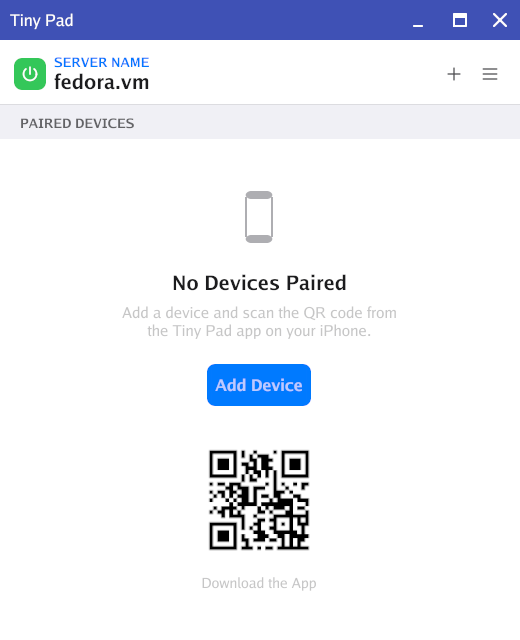
Tiny Pad for Fedora is published as an RPM package (.rpm) in the Tiny Pad repository. Add the repository once and dnf installs it and every later release, the same way it handles the rest of your system.
Add the Tiny Pad repository
The recommended way. Two commands, and updates arrive on their own afterwards.
Add the repository
Fetch the repository definition. It carries the address of the signing key, so there is nothing else to set up:
Install Tiny Pad
Install the package. On the first run dnf shows you the signing key’s fingerprint and asks you to accept it:
sudo dnf upgrade. Every package and every index is signed, and dnf refuses anything that does not verify.Start Tiny Pad
Launch the server from the terminal, or find Tiny Pad Server in your applications menu:
Install a single release by hand
Use this if you would rather not add a repository. It installs one release and nothing more: Tiny Pad will not update itself, so you repeat these steps for each new version. Prefer to point and click? Fedora’s Software app opens a downloaded .rpm directly. No extra tools to install.
Find the downloaded package
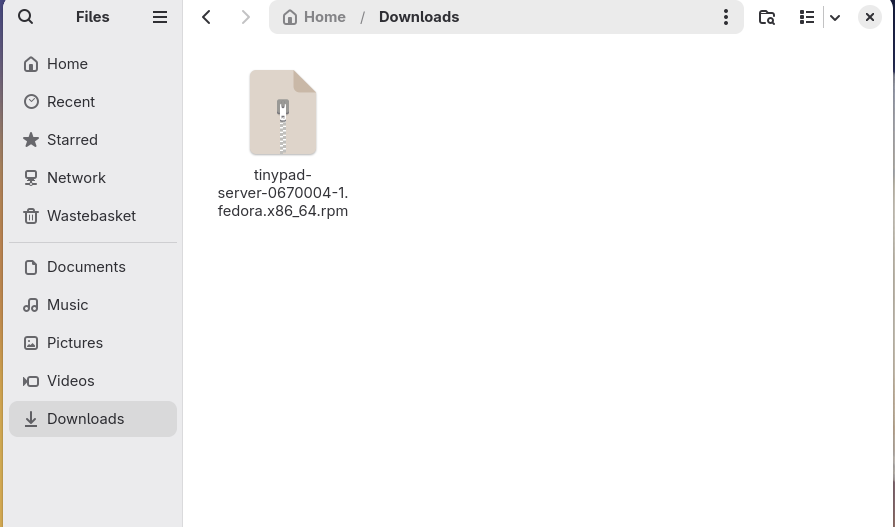
Open Files and go to your Downloads folder. You should see the Tiny Pad .rpm you downloaded.
Open it and click Install
Double-click the .rpm. It opens in the Software app as a Local file. Click Install. If Fedora offers to enable third-party repositories, you can safely click Ignore. The local file does not need them.

Authenticate
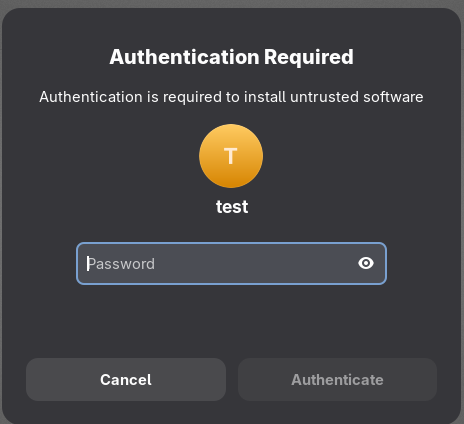
Enter your password to authorize the installation, then click Authenticate.
Finish
The Software app installs Tiny Pad and its dependencies. When it is done, the button changes to Open.

Start Tiny Pad
Launch Tiny Pad Server from the Software app or your applications menu. Click Add Device to pair your iPhone.